About 76 kilograms of food per person end up in household trash every year. What’s actually avoidable, why it happens, and the five rules that really make a difference.
How much food gets thrown away in Germany?
Germany most recently generated around 10.9 million tonnes of food waste a year. Private households cause the largest share, at about 52 percent: roughly 76 kilograms per person per year. A significant portion of that would have been avoidable.
The key points:
- The biggest source isn’t retail or restaurants; it’s private households.
- Main causes: poor planning, improper storage, and a misunderstood best-before date.
- Worldwide, around a third of all food produced is lost or thrown away.
- The most effective levers at home are a shopping list, correct storage, and using up leftovers, in that order.
Why does so much food end up in the trash?
The causes lie in everyday habits, not a lack of good intentions. Three patterns explain most of the waste in private households.
- Shopping without a plan. Shopping hungry and without a list means buying more, and buying the wrong things. Whatever doesn’t fit into a planned meal just sits there.
- Improper storage. Tomatoes lose flavor and turn mealy in the fridge; apples release ethylene and make nearby fruit ripen faster. Small mistakes cost days of shelf life.
- A misunderstood best-before date. The best-before date is the manufacturer’s quality promise, not an expiration date. Much of it is still perfectly good well after that date; for exactly what, see the article on expired food.
Good to Know
According to the Umweltbundesamt (German Environment Agency), around a third of all food produced worldwide is lost or thrown away. Every piece of food that gets thrown away also wastes the water, energy, and farmland that went into growing it.
Which five rules cut waste the most?
- 1Shop with a list, and not while hungry. The list comes from the weekly meal plan, not the other way around. le’Chef builds it automatically from your weekly meal plan and groups it by category.
- 2First in, first out. Newly bought food goes to the back, older items move to the front. This one habit while putting groceries away prevents most of the waste that comes from simply forgetting something is there.
- 3Store things correctly. Not everything belongs in the fridge:
- Fridge: dairy, meat, fish, leafy greens, berries, broccoli
- Room temperature: tomatoes, potatoes, onions, garlic, bananas, avocados
- Store separately: apples and pears release ethylene and make neighboring produce ripen faster
- 4Use everything. Broccoli and cauliflower stems are tender and mild once peeled. Radish and carrot greens make a great pesto. Stale bread becomes croutons, breadcrumbs, or dumplings.
- 5Freeze early enough. Not once something’s already going off, but as soon as it’s clear it won’t get used in time.
Kitchen Tip
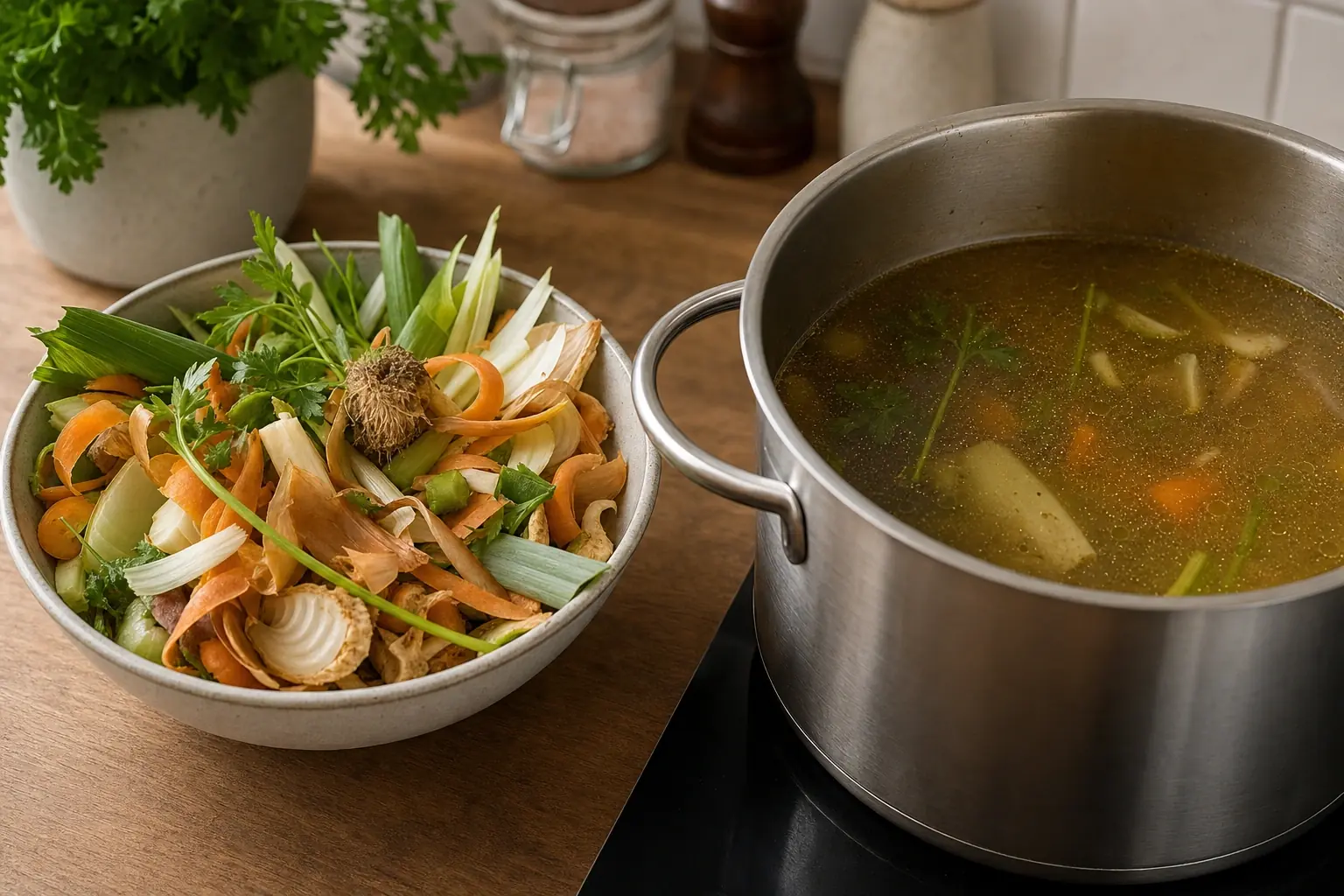
Collect vegetable scraps (onion skins, carrot ends, celery leaves, leek trimmings) in a box in the freezer. Once it’s full, simmer the contents with water, bay leaf, and peppercorns for 45 minutes for a rich, homemade vegetable stock.
How does a cooking app help against waste?
The decisive moment isn’t the shopping trip; it’s looking into the fridge three days later. That’s exactly where le’Chef steps in:
- Cook with what you have. Photograph or enter your ingredients: the AI suggests recipes that use exactly those ingredients.
- A pantry with best-before date tracking. The app knows what needs using up soon and prioritizes recipes accordingly.
- Quantities scaled to headcount. Recipes can be scaled exactly to the number of people eating, so nothing’s left in the pot.
- A shared shopping list. Up to six household members can access the same list, so nobody buys milk for the third time.
What’s the environmental impact?
Food does most of its environmental damage long before it reaches the plate: during growing, transport, refrigeration, and processing. When food gets thrown away, all of that effort was for nothing. That’s why not throwing food away is more environmentally effective than almost any change you could make while shopping.
Animal products weigh heaviest here: meat, cheese, and butter tie up many times more resources per kilogram than vegetables or grains. Not letting exactly those products spoil has the biggest impact.
Where should you store what?
Improper storage costs days of shelf life, often without you noticing the connection. This overview covers the most common cases.
| Food | Best place | Why |
|---|---|---|
| Tomatoes | Room temperature | Cold destroys flavor, makes them mealy |
| Potatoes | Dark, cool, airy | Light causes green spots, cold makes them sweet |
| Onions, garlic | Dry, airy, not next to potatoes | Shared moisture makes both sprout |
| Bread | Bread box or paper | The fridge makes it go stale faster |
| Bananas, avocados | Room temperature | Won’t ripen further in the fridge |
| Apples | Away from other fruit | Release ethylene, speed up ripening |
| Berries | Fridge, unwashed | Moisture encourages mold |
| Leafy greens | Fridge, wrapped in a damp cloth | Otherwise dries out within hours |
| Herbs | Like flowers, in a glass of water | Keep for over a week that way |
| Mushrooms | Paper bag in the fridge | Sweat and turn slimy in plastic |
| Hard cheese | Fridge, in cheese paper | Plastic wrap makes it sweat |
| Eggs | Fridge or somewhere cool | Once chilled, keep them chilled consistently |
Kitchen Tip
The coldest zone in the fridge is the bottom shelf above the vegetable drawer; that’s where meat, fish, and cured meats belong. The door is the warmest spot and is only suited to drinks, butter, and pickled items, not milk.
Frequently asked questions
How much food does a German household throw away per year?
Around 76 kilograms per person per year end up in the trash in private households. Across every sector (farming, processing, retail, restaurants, and households), food waste in Germany adds up to about 10.9 million tonnes a year.
Can I still eat food after the best-before date has passed?
In most cases, yes. The best-before date states how long the manufacturer guarantees full quality; it isn’t an expiration date. With undamaged packaging, correct storage, and no unusual smell, appearance, or taste, many products are still perfectly good to eat well after that date. It’s different for the use-by date: that applies to highly perishable food and is binding.
Which foods don’t belong in the fridge?
Tomatoes, potatoes, onions, garlic, bananas, avocados, citrus fruit, and bread all keep better at room temperature. Cold changes the flavor of tomatoes, makes potatoes taste sweet, and makes bread go stale faster.
How do I freeze leftovers properly?
Let them cool completely, portion them into airtight containers, note the date, and freeze them flat; flat portions freeze faster and thaw more evenly. Leave about two centimeters of headroom in the container, since liquid expands as it freezes.
What can I still make from vegetable scraps?
Peels and ends become stock, radish or carrot greens become pesto, soft fruit becomes compote or a smoothie, stale bread becomes croutons or breadcrumbs. Broccoli and cauliflower stems can be peeled and prepared just like kohlrabi.
Sources
- Umweltbundesamt (German Environment Agency): A third of all food is wasted
- Bundesministerium für Ernährung und Landwirtschaft (Federal Ministry of Food and Agriculture): Food waste in Germany by sector
- Verbraucherzentrale (Consumer Advice Centre): Best-before date is not the same as the use-by date
Keep reading: What to cook with leftovers · Best-before date passed: what’s still edible