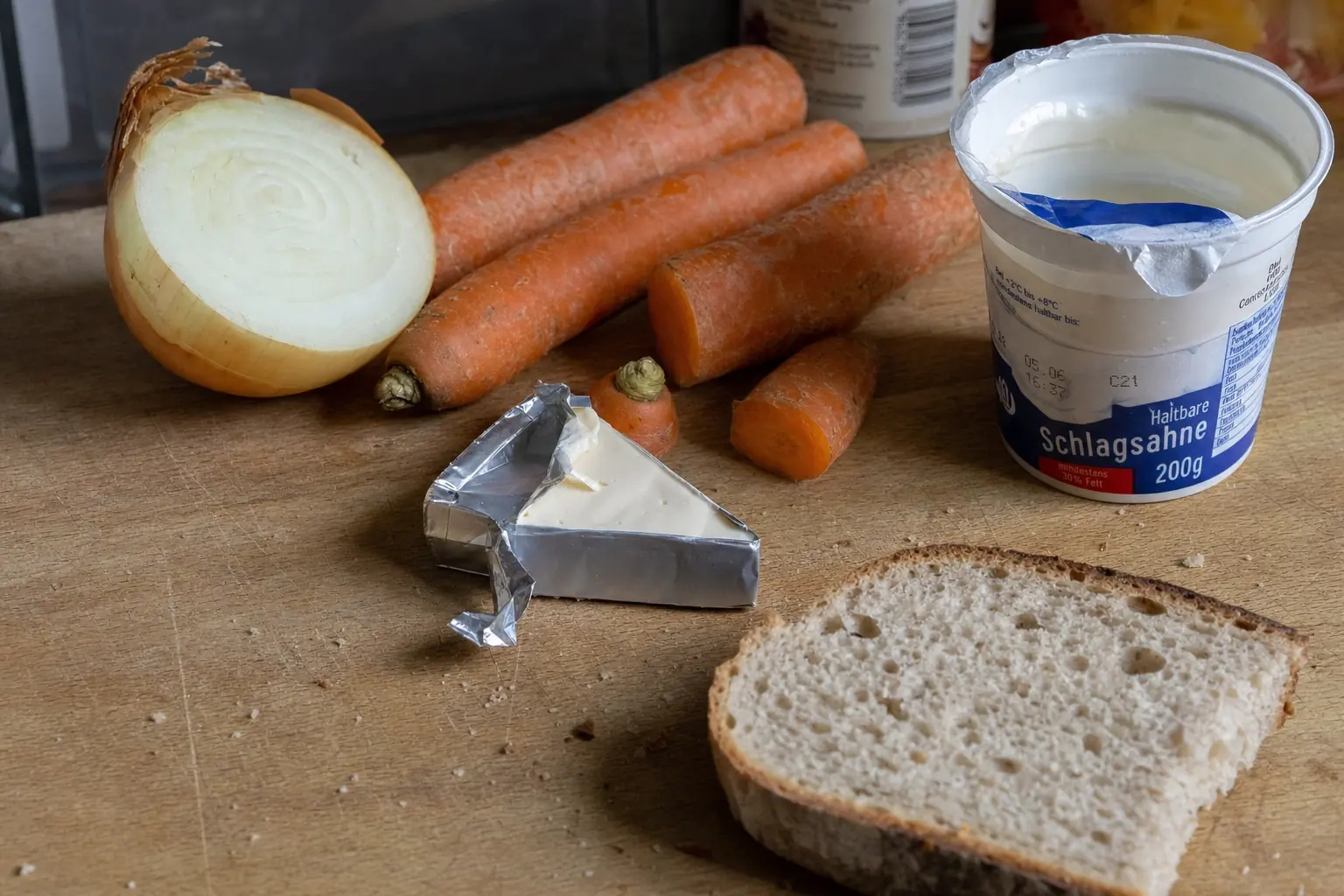
Half an onion, a bit of leftover cream, three carrots: the base patterns that turn odds and ends into a full meal, plus a table of what pairs with what.
What can you cook when all you have left is odds and ends?
Leftovers become a full meal as soon as three roles are filled: a filling base, something savory, and acid or freshness. Which specific ingredients fill those roles is secondary; that’s why leftover cooking works almost every time, once you think in roles instead of recipes.
The key points:
- Think in roles, not recipes: base, savory, acid, optional texture.
- Seven base patterns cover almost any leftover situation, from a stir-fry to a frittata.
- German households throw away around 76 kilograms of food per person per year; cooking with leftovers is the most direct counter-lever.
- Order in the fridge: use up what spoils fastest first (leafy greens, herbs, anything already opened).
What three roles does every dish need?
| Role | Job | Typical leftovers |
|---|---|---|
| Base | fills you up, binds | Pasta, rice, potatoes, bread, couscous |
| Savory | adds depth (umami) | Cheese rind, bacon, tomato paste, soy sauce, mushrooms, anchovies |
| Acid / freshness | wakes it up | Lemon, vinegar, yogurt, pickled vegetables, mustard |
| Texture (optional) | adds crunch | Nuts, seeds, toasted bread cubes, crispy onions |
Without acid, a dish made from leftovers tastes flat; that’s the most common reason leftovers get labeled “boring.” A splash of lemon or a teaspoon of vinegar at the end changes more than any extra spice would.
The seven base patterns
- 1Everything stir-fry: sear the base, add vegetables, deglaze with soy sauce or broth. Works with cooked rice, pasta, or potatoes from the day before; cold starch browns better than freshly cooked.
- 2Frittata or omelet: whisk eggs, fold in leftovers, let it set in the pan and finish in the oven. Takes almost anything: vegetables, cheese, potatoes, leftover herbs.
- 3Soup from leftovers: sweat onion, add vegetables, pour in broth, simmer until soft, partially purée. Leftover cream, hard cheese, and stale bread disappear here without a trace.
- 4Bake: layer the base and vegetables, pour over cream, egg, or béchamel, top with cheese and bake. The classic for small amounts of many different things.
- 5Cold bowl: leftover grains, raw and cooked vegetables, a spoonful of yogurt dressing, seeds on top. Needs no stove at all.
- 6Wrap or stuffed flatbread: chop everything small, season, roll it up. Rescues even the smallest amounts, since the filling doesn’t need to match.
- 7Pesto or paste: blend herb stems, carrot tops, radish leaves with oil, nuts, and cheese. Keeps in the fridge for a week and turns pasta into a meal.
Kitchen Tip
Roast hard leftovers before using them. Stale bread, dried-out cheese rind, and shriveled carrots gain noticeably more flavor after ten minutes in a 180 °C oven; roasted flavor develops exactly where freshness is missing.
What pairs with which leftover?
| Leftover | Pairs with | Best pattern |
|---|---|---|
| Half an onion | almost everything | Base for a stir-fry or soup |
| Leftover cream or crème fraîche | Pasta, bake, soup | Bake, soup |
| A few carrots | Onion, ginger, lentils | Soup, stir-fry |
| Leftover rice | Egg, scallion, soy sauce | Stir-fry |
| Dry bread | Egg, milk, cheese, garlic | Bake, croutons |
| Cheese rind (hard cheese) | Soup, stew | simmer along, remove before serving |
| Wilted lettuce | Onion, broth | simmer briefly in the soup |
| Herb stems | Oil, nuts, garlic | Pesto |
| Opened can of tomatoes | Onion, garlic, pasta | Stir-fry, soup |
In what order should you use up leftovers?
By perishability, not by preference. This order stops exactly what was good at the start of the week from ending up in the trash at the end:
- 1First: leafy greens, fresh herbs, mushrooms, cut fruit, opened dairy products
- 2Next: meat and fish leftovers (within one to two days), cooked dishes
- 3Last: root vegetables, cabbage, potatoes, onions, grains, and canned goods
If you lose track, the le’Chef pantry can help: it remembers best-before dates and suggests recipes for whatever needs using up first.
Good to Know
Leftovers are the most common avoidable waste. Around 52 percent of all food waste in Germany happens in private households: that’s about 76 kilograms per person per year.
Three leftover dishes that always work
Fried rice from the day before. Fry cold rice in hot oil until the grains separate. Add finely chopped vegetables, stir-fry briefly, deglaze with soy sauce. Let an egg set at the edge of the pan and fold it in. Finish with scallion or herbs. Hands-on time: 12 minutes.
Savory bread bake. Cube stale bread and put it in a greased dish. Scatter leftover vegetables, cheese, and sausage over it. Whisk three eggs with 200 milliliters of milk or cream, season, pour over, and let it sit for ten minutes. Bake at 180 °C for about 35 minutes.
Clear soup with everything. Sweat onion in oil, add vegetable scraps, pour in broth, and simmer until soft. Simmer a hard cheese rind along with it: it adds depth and gets removed before serving. Purée half of it at the end; that makes the soup creamy without needing any cream.
Frequently asked questions
How long can I keep leftovers in the fridge?
Cooked dishes generally keep for three to four days if they were cooled quickly and sealed airtight. Cooked ground meat and fish should be used within one to two days. Cut raw vegetables keep for two to three days.
Can I reheat food that’s already been reheated once?
Better not to. Every cooling and reheating cycle gives bacteria a chance to multiply. So only reheat the portion you’re actually going to eat, and heat it all the way through, until it’s steaming hot throughout. Rice is especially sensitive here.
What do I do with half a container of cream or crème fraîche?
Both work well in soups, bakes, and pasta sauces. Cream can also be frozen in portions and used later for cooking, though thawed cream won’t whip anymore.
Which leftovers should I never use?
Anything moldy among soft foods (yogurt, jam, soft cheese, fruit, cooked dishes), since the mold’s network spreads invisibly through the whole product. The same goes for food past its use-by date, and anything that smells sour or off.
How do I plan so fewer leftovers pile up?
Plan dishes that share ingredients: if half an onion or some leftover cream is already accounted for in the meal after next, it never becomes a leftover in the first place. A weekly meal plan with a shared shopping list makes these overlaps visible; more on that in weekly meal planning for the family.
Sources
- Bundesministerium für Ernährung und Landwirtschaft (Federal Ministry of Food and Agriculture): Food waste in Germany by sector
- Umweltbundesamt (German Environment Agency): A third of all food is wasted
Keep reading: Sustainable cooking · Best-before date passed