How to cook for half the week in two to three hours, with a schedule, a shelf-life table, and the mistakes beginners make most often.
What is meal prep, and who is it worth it for?
Meal prep means planning and preparing meals for several days in advance. Instead of cooking from scratch every evening, you handle shopping, chopping, and cooking together on a single day. It saves time day to day, lowers the cost per meal, and cuts food waste significantly.
The key points:
- Two basic approaches: finished meals or prepped components. Component prep works better for beginners.
- A realistic start: prep for 3 to 4 days, not a whole week right away.
- Cooked dishes typically keep in the fridge for 3 to 4 days; fish and cooked ground meat only 1 to 2 days.
- German households throw away around 76 kilograms of food per person per year. Planning is the most effective lever against that.
Component prep or finished meals?
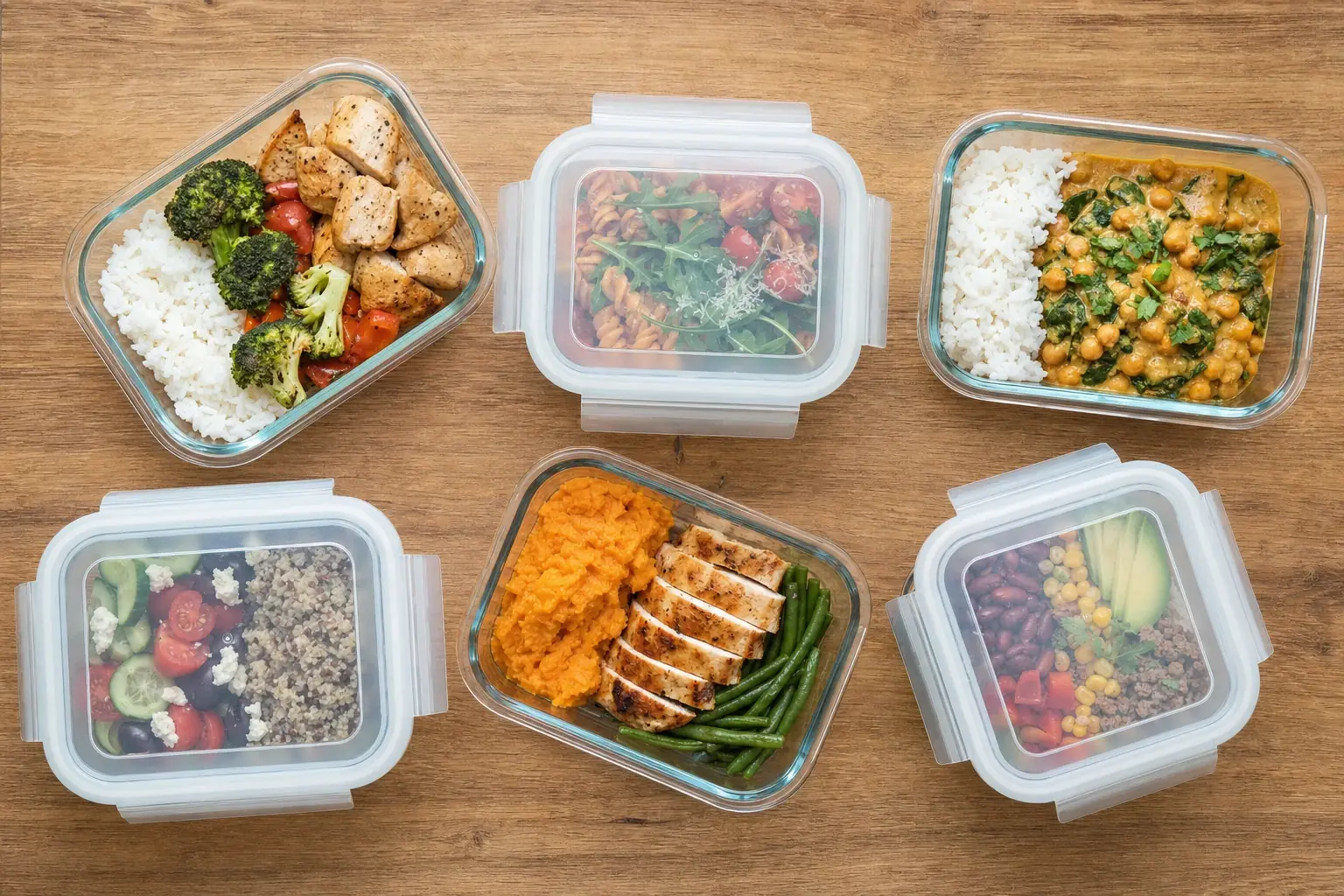
With component prep, you prepare building blocks (grains, roasted vegetables, a protein source, a dressing) and assemble something fresh from them every day. With classic meal prep, you cook finished dishes, portion them, and just reheat them later.
| Component prep | Finished meals | |
|---|---|---|
| Variety | high, recombine daily | low, same dish repeated |
| Effort on prep day | medium | high |
| Time on eating day | 5–10 minutes | 2–3 minutes |
| Good for | beginners, picky eaters | office, on the go, a fixed routine |
Good to Know
Component prep is more forgiving: if you’re not in the mood for a bowl on Wednesday, the same rice just becomes a stir-fry instead. Finished portions lock you into the decision you made on Sunday.
How much time does meal prep save per week?
According to the 2022 time-use survey by the Statistisches Bundesamt (Federal Statistical Office), people in Germany spend an average of 41 minutes a day on food preparation and kitchen work: nearly five hours a week. If you batch two to three hours of prep, you shift that effort and get your weekday evenings back.
The gain doesn’t come from cooking faster; it comes from three effects:
- Setup time happens once instead of five times. Getting the kitchen ready, washing the board, preheating the oven: that costs 10 to 15 minutes per cooking session, regardless of quantity.
- The daily decision disappears. “What should I cook today?” is the exact moment delivery wins.
- Shopping becomes targeted. Shopping with a list means fewer trips and less buying of things that spoil unused.
What equipment do you actually need?
To get started, airtight containers, a sharp kitchen knife, and a baking sheet are enough. Everything else is a nice-to-have, not a requirement.
- Airtight storage containers, ideally glass: flavor-neutral, microwave-safe, dishwasher-safe, and durable. Plan on 6 to 8 containers to start.
- A sharp kitchen knife and a large cutting board: a dull tool is the biggest time sink when prepping.
- Two baking sheets: roasting vegetables in a single layer instead of two batches cuts the cook time for your biggest component in half.
- Freezer bags or containers for anything meant to keep longer than four days.
Kitchen Tip
Label every container with the prep date, not a guessed expiration date. The prep date is always accurate; an estimated expiration date tempts you either to throw away something still good or to eat something that’s gone off.
What does a realistic prep week actually look like?
The workflow spreads across three short sessions instead of one long afternoon. That’s what keeps it manageable even in week three.
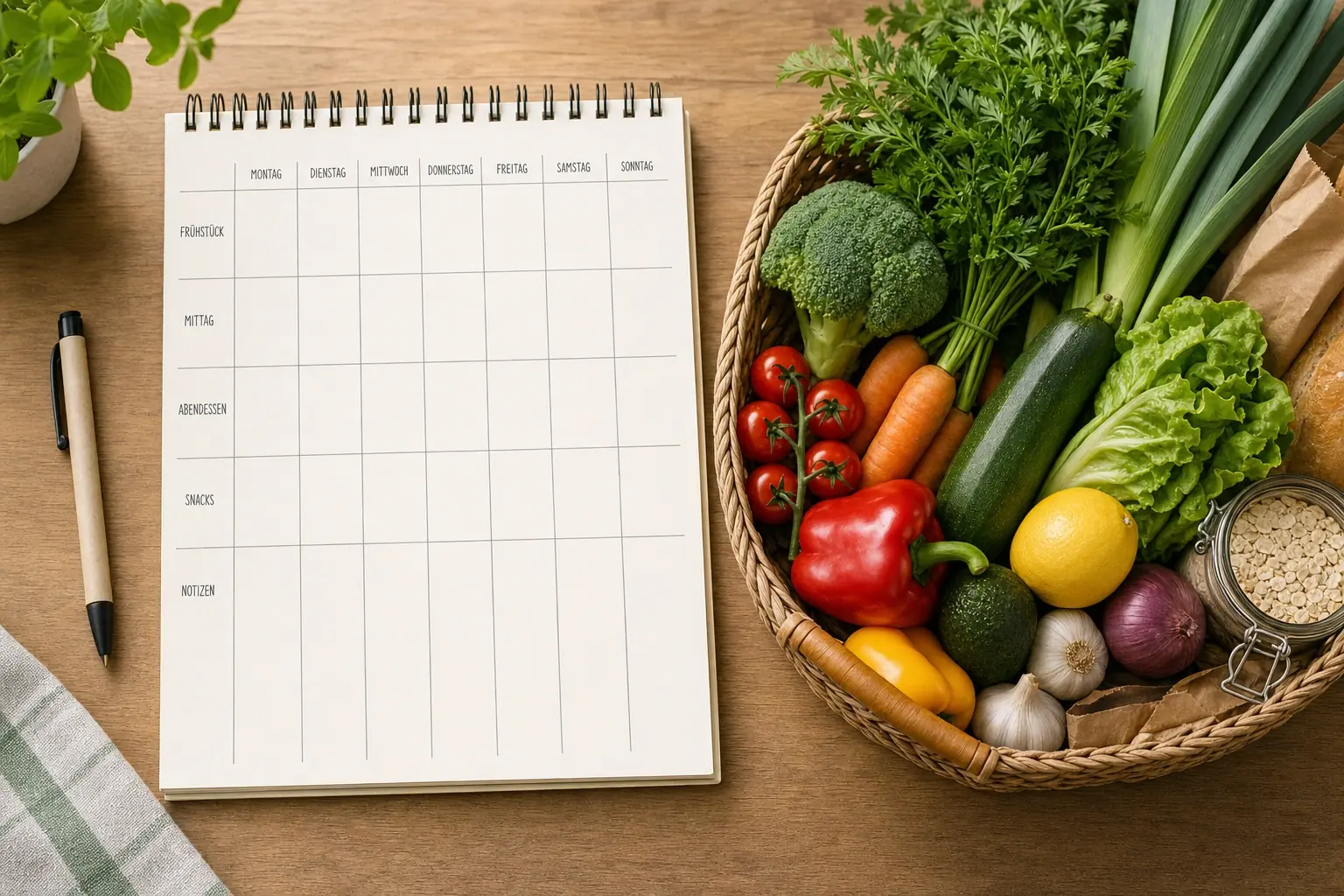
- 1Friday, plan (15 minutes): Decide how many days you’re prepping for. Three to four is enough to start. Choose dishes that share ingredients: if roasted vegetables show up in two dishes, you roast them once. You can use the weekly planner in le’Chef for this; it then carries everything straight over to the shopping list.
- 2Saturday, shop (45 minutes): Buy strictly from the list. le’Chef sorts the shopping list by category, so you only walk through the store once.
- 3Sunday, prep (2 to 3 hours): Work in this order:
- Turn on the oven, cut vegetables, and roast them first: that runs in the background.
- Start your grains: rice, quinoa, or couscous.
- Prepare proteins: chicken, tofu, lentils, or eggs.
- Mix dressings and sauces and bottle them separately.
- 4Portion and store (20 minutes): Let everything cool completely before sealing it airtight. Sealing it warm creates condensation, which noticeably shortens shelf life.
The most common beginner mistake
Too much at once. If your first attempt is five different dishes for seven days, you’ll spend six hours in the kitchen and never do it again. Two components for three days is a better start than a perfect weekly plan you only follow once.
How long does prepped food actually keep?
Most cooked food keeps in the fridge for three to four days at a maximum of 7 °C. What matters most is how fast it cools and how airtight the storage is, not the dish itself.
| Food | Fridge | Freezer |
|---|---|---|
| Cooked grains, rice, pasta | 3–4 days | 2–3 months |
| Roasted vegetables, cooked root vegetables | 4–5 days | 3 months |
| Cooked chicken, tofu | 3–4 days | 2–3 months |
| Soups, stews, chili | 3–4 days | 3–4 months |
| Cooked ground meat, fish | 1–2 days | 1–2 months |
| Cut raw vegetables, salads | 2–3 days | not suitable |
| Mixed dressings | 5–7 days | not suitable |
Good to Know
Rice deserves special attention: cooked rice left too long at room temperature can let Bacillus cereus spores multiply. Cool it down within an hour and only reheat it once.
How much money does meal prep actually save?
According to the Statistisches Bundesamt (Federal Statistical Office), private households in Germany most recently spent around 335 euros a month on food. Meal prep saves money in three places you can actually put a number on:
- Less spoilage. Shopping to a plan means throwing away less. At 76 kilograms of waste per person per year, this is the biggest line item.
- Buying in bulk. A kilogram of lentils costs noticeably less per portion than the 250-gram bag, but only pays off if a plan actually uses up the quantity.
- Fewer delivery orders. Every order you skip is worth several home-cooked portions.
Frequently asked questions
How long does meal prep take for a week?
As a beginner, plan on about two to three hours including cleanup for three to four days. With practice, that drops to about ninety minutes. Prepping a full week at once rarely makes sense, since fresh components lose quality after four days.
Can I freeze prepped food?
Yes, most cooked dishes freeze well. Soups, stews, sauces, grains, and cooked meat all work well. Leafy salads, sliced cucumber, chunks of potato, and yogurt-based dressings don’t; they lose their texture when thawed.
Is meal prep healthy, or do nutrients get lost?
Prepped food is generally healthier than the alternative you’d reach for without a plan. Some heat- and light-sensitive vitamins are lost during cooking and storage, especially vitamin C and folate. Adding raw components like lettuce or herbs just before eating largely offsets that.
What do I do if I’m not in the mood for what I prepped?
That’s exactly what component prep is for. If you store grains, vegetables, and protein separately, you decide fresh every day how to combine and season them. The same base becomes a bowl one day and a stir-fry with soy sauce the next.
How do I tell if prepped food is still good?
Rely on the date, the smell, and the look of it, in that order. Anything that’s been in the fridge more than four days deserves a check; a sour smell, sliminess, or an off color mean it’s time to toss it. For more on this, see the article on expired food and the best-before date.
Sources
- Statistisches Bundesamt (Federal Statistical Office): 2022 time-use survey
- Statistisches Bundesamt (Federal Statistical Office): Household consumption spending
- Bundesministerium für Ernährung und Landwirtschaft (Federal Ministry of Food and Agriculture): Food waste in Germany
Keep reading: Five tips for healthy cooking with little time · Weekly meal plan for the whole family