People in Germany spend 41 minutes a day cooking, on average. Five strategies that turn that time into balanced meals instead of another delivery order.
How do you cook healthy when you’re short on time?
Healthy cooking on a tight schedule comes down to preparation and stocking up, not moving faster at the stove. If you keep staple ingredients on hand and prep components in advance, you only need about 15 minutes in the kitchen on a weeknight, and you’ll reach for ready meals or delivery far less often.
The key points:
- People in Germany spend an average of 41 minutes a day on food preparation and kitchen work.
- Time rarely runs out during the actual cooking; it runs out during deciding, shopping, and cleaning up.
- Five levers work best: prepping ahead, one-pot meals, stocking up, go-to modular recipes, and doubling quantities.
- A well-stocked pantry replaces spontaneous shopping trips, and with it, the most common reason people order in.
Why does healthy cooking usually fail somewhere other than the stove?
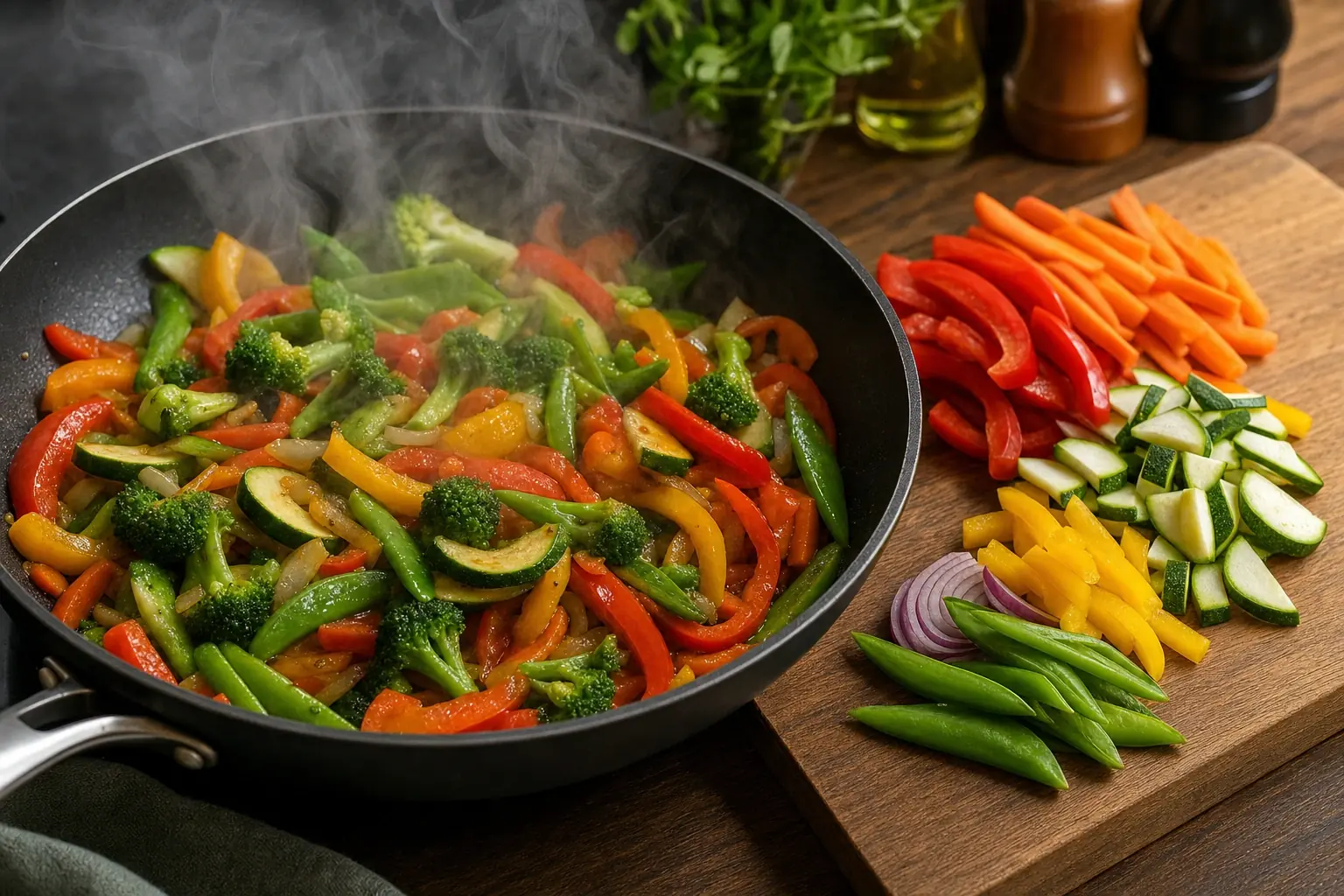
The bottleneck sits before the stove. According to the 2022 time-use survey by Germany’s Statistisches Bundesamt (Federal Statistical Office), people spend an average of 41 minutes a day on food preparation and kitchen work. A simple stir-fry takes 15 of those minutes; the rest goes toward deciding what to eat, shopping, prepping, and cleaning up.
The five strategies below target exactly those edges.
1. How much time does weekend prep actually save?
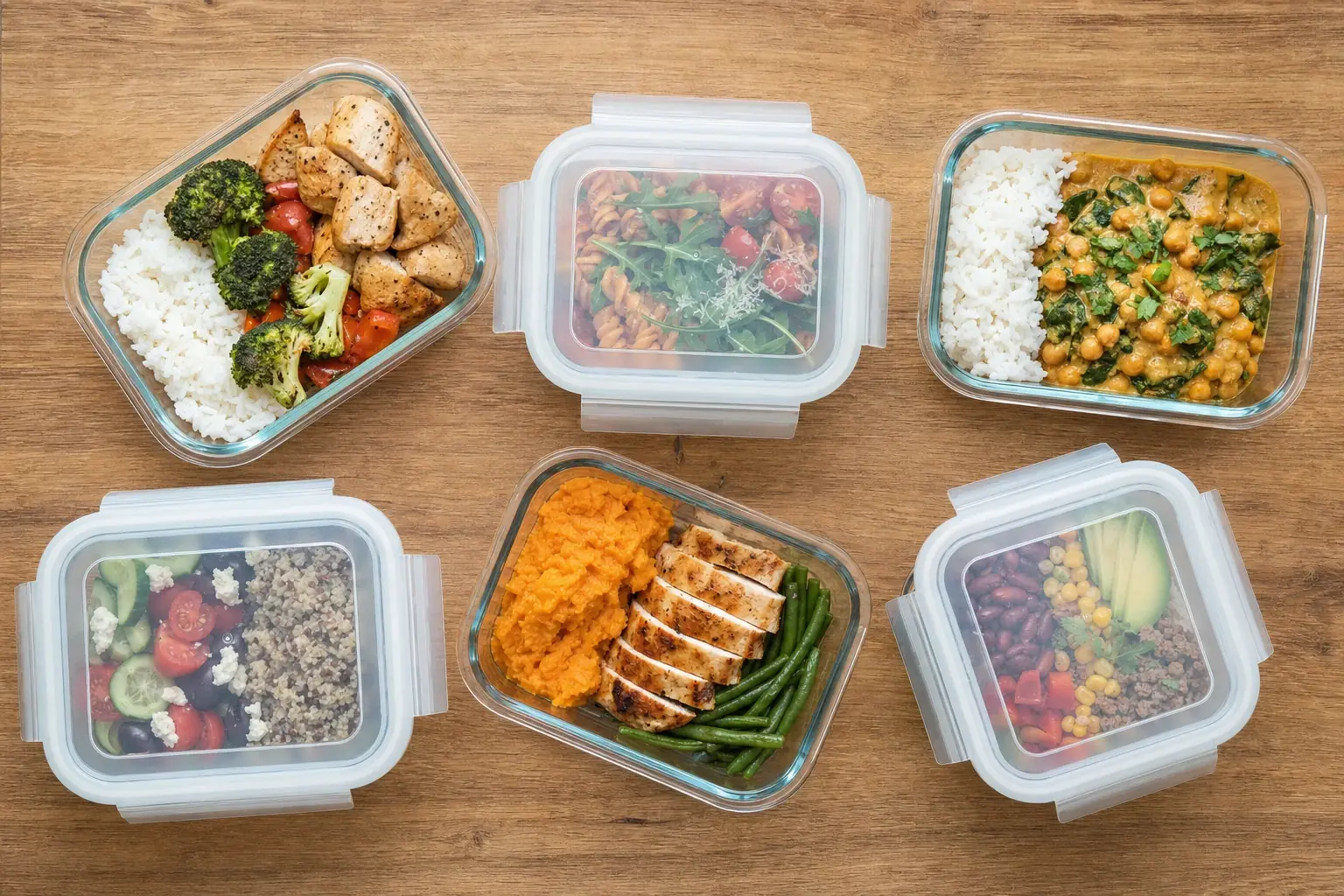
Two to three hours of focused prep replace roughly 30 minutes of cooking time on each of three to four weekdays. The savings come from doing the chopping and cleanup once instead of every single evening.
Prepare building blocks instead of finished dishes: cooked grains, roasted vegetables, a protein source, a dressing. Then assemble something fresh from them every day. For the full step-by-step process, see the meal prep guide for beginners.
Good to Know
Meal prep doesn’t mean eating the same thing every day. If you prep components instead of whole menus, you recombine them daily: the same base becomes a bowl on Monday and a stir-fry on Wednesday.
2. Why are one-pot meals the biggest time-saver?
The part of cooking people put off the most is the washing-up afterward, and it’s also the most reliable reason not to cook again the next day. One-pot meals cook every ingredient, one after another, in a single pot, leaving exactly one thing to wash.
Reliable base patterns:
- Pasta cooked in the sauce: pasta, broth, tomatoes, and vegetables simmered together. The starch thickens the sauce on its own.
- Rice skillet: sauté onion and vegetables, add rice and double the amount of liquid, cover and cook.
- Lentil stew: red lentils need no soaking and are done in 10 to 12 minutes.
- Sheet-pan bake: vegetables, potatoes, and protein baked together at 200 °C. Under ten minutes of hands-on work.
3. Which staples make you independent from the store?
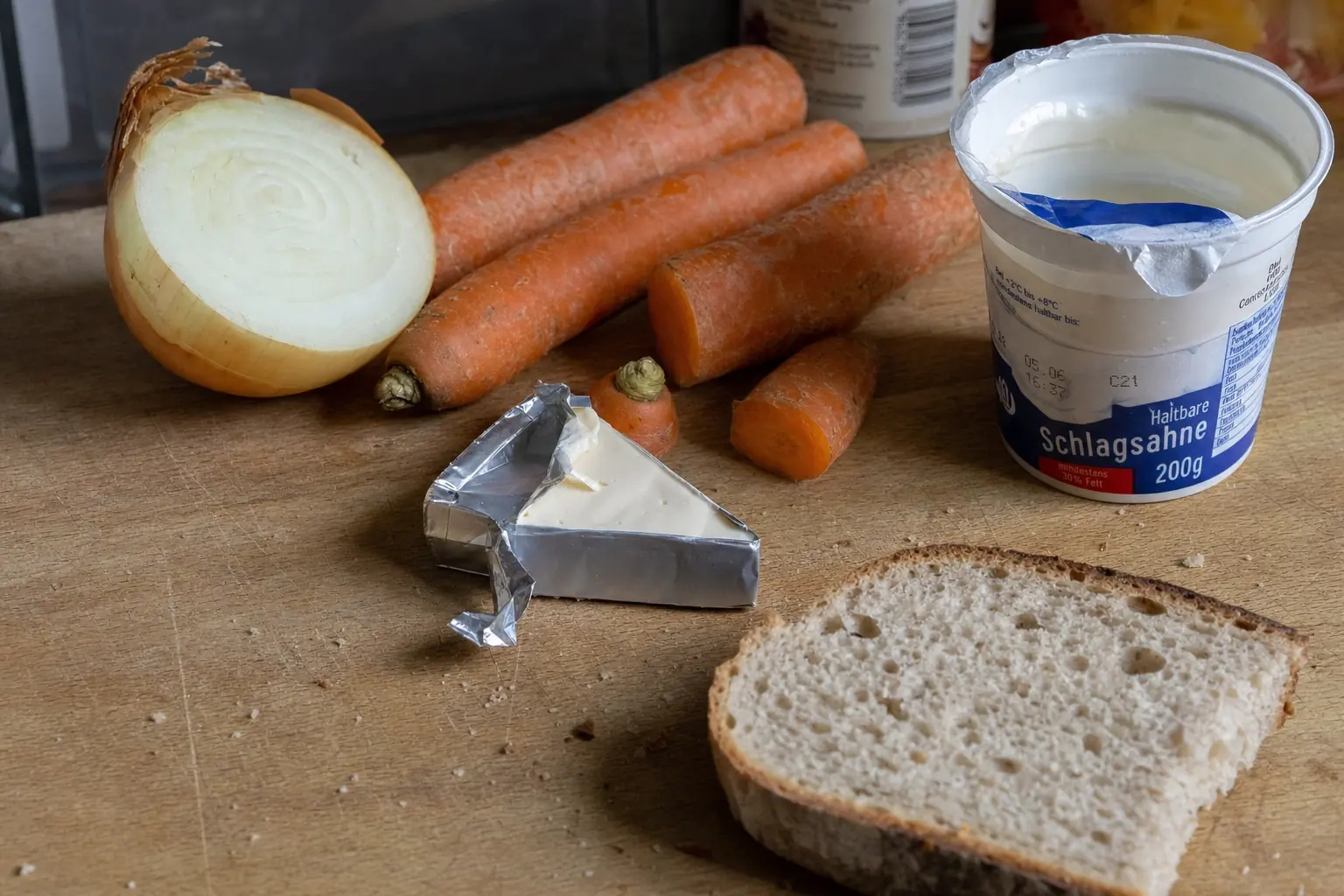
The most common reason for ordering delivery is an empty fridge in the evening. A base stock that covers three meals solves that problem for good.
| Category | Examples | Why |
|---|---|---|
| Fast-cooking grains | Couscous, red lentils, instant rice | 5–12 minutes to cook, no soaking |
| Canned goods | Chickpeas, tomatoes, coconut milk | keep for years, ready to use instantly |
| Frozen vegetables | Peas, spinach, broccoli, berries | flash-frozen right after harvest |
| Fats and acid | Olive oil, lemons, vinegar | turn basic ingredients into a finished dish |
| Nuts and seeds | Sunflower seeds, almonds | texture and fullness without any cooking |
The le’Chef pantry keeps track of what’s at home and what it can become, best-before dates included, and suggests recipes for whatever needs using up first.
Kitchen Tip
Always keep red lentils on hand. They need no soaking, are soft in about ten minutes, and turn into a complete dish with coconut milk, tomatoes, and curry powder: three pantry ingredients, one dinner.
4. What is a modular recipe?
A modular recipe isn’t a fixed recipe at all; it’s a blueprint with interchangeable roles. Learn the structure once, and after that you improvise with whatever you have, which cuts out the daily recipe search entirely.
The most common structure is the bowl:
- 1Base: grains or potatoes, about a handful, cooked.
- 2Protein: egg, chickpeas, tofu, chicken, or cheese.
- 3Vegetables: raw, steamed, or roasted, ideally two kinds.
- 4Sauce: three parts oil, one part acid, a little mustard or yogurt.
- 5Topping: nuts, seeds, herbs, or pickled vegetables for crunch.
Soup, wraps, and stir-fries follow the same pattern. Master three of these blueprints and you can cook without a recipe book.
5. Why is doubling the batch almost always worth it?
For soups, stews, chili, bolognese, and curries, cooking double the amount barely adds any extra work; you just need a bigger pot. The second half goes into the freezer in portions and turns into a finished meal in five minutes on a day when you need it most.
Anything with a sauce or liquid freezes well. Less suited: seared food with a crust, leafy salads, and dishes with chunks of potato, which turn mealy when thawed.
“Since I started cooking double portions and freezing them individually, I eat much more balanced meals and barely throw any leftovers away.” - Thomas, VIP Supporter
Frequently asked questions
How long does a genuinely quick, healthy dinner take?
With prepped components or a well-stocked pantry, 15 to 20 minutes is realistic. Red lentils, couscous, and frozen vegetables are ready in about ten minutes; the rest of the time goes toward seasoning and plating.
Are frozen vegetables as healthy as fresh ones?
Frozen vegetables are usually flash-frozen shortly after harvest, which preserves most of their vitamins. Fresh produce that’s spent several days in transport and storage can actually fall behind on vitamin content. For everyday cooking, frozen is a fully valid alternative.
What’s the difference between meal prep and batch cooking?
Meal prep means preparing meals or components for the days ahead. Batch cooking means cooking several times the amount of one dish and freezing the surplus. The two combine well: components for the week, a big pot of stew for the freezer.
How do I stop prepped vegetables from turning mushy?
Cook vegetables until just tender and cool them quickly before sealing the container. Residual heat in a closed container keeps cooking the food. Store watery vegetables like zucchini or cucumber separately and add them only just before eating.
Does healthy cooking actually save money compared to delivery?
Significantly. According to the Statistisches Bundesamt (Federal Statistical Office), private households spend around 335 euros a month on food, which, spread across three meals a day, works out to a low single-digit amount per portion. A single delivery order regularly costs more than that.
Sources
- Statistisches Bundesamt (Federal Statistical Office): 2022 time-use survey
- Statistisches Bundesamt (Federal Statistical Office): Household consumption spending
Keep reading: Meal prep for beginners · What to cook when all you have left are leftovers